
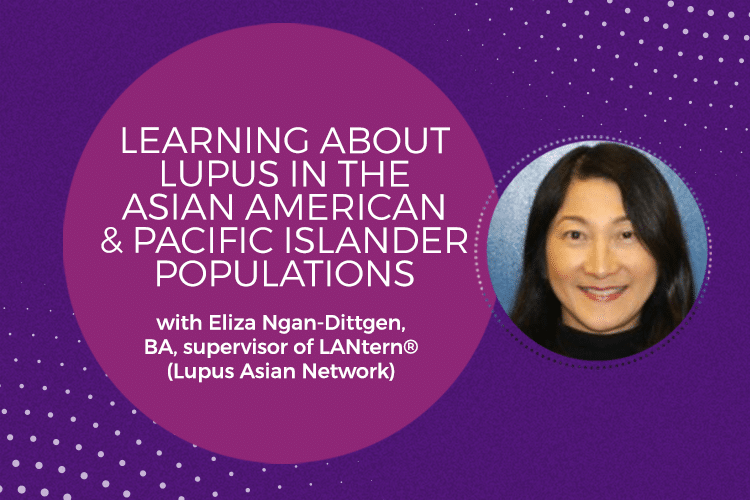
May marks Lupus Awareness Month – but it is also a month to honor Asian American and Pacific Islander Heritage Month.
Asian American and Pacific Islander populations are at disproportionate risk for lupus.
To learn more about this connection, we spoke with Eliza Ngan-Dittgen, BA, supervisor of LANtern® (Lupus Asian Network) at the Hospital for Special Surgery (HSS) — long-time supporter of the LRA.
Tell us about your personal journey with lupus.
My connection to lupus is deeply personal — my mother also lives with the disease, and we became “lupus buddies,” supporting one another through our journeys. Being diagnosed at a time when I already had considerable knowledge about lupus made a difference. That understanding reduced fear and allowed me to approach my diagnosis with a sense of preparedness rather than panic. Over time, I learned firsthand how closely stress and lupus are connected, and I worked intentionally to build habits and routines that help manage both.
Having my mother also live with lupus created a unique bond between us. We learned together, supported each other, and were constantly reminded that no one should face this disease alone. Education became one of my strongest coping tools, and it remains central to how I support others living with lupus today.
Can you please describe how your personal experience helps in your role at HSS?
Both my professional and personal experiences shape the work I do every day. Having a strong foundation of knowledge about lupus early in my diagnosis helped me navigate the disease with less anxiety, and over time I’ve developed a lifestyle focused on stress management and self-care to cope with its complexity. I am so proud to lead a program that empowers others through education, peer support, and culturally responsive care.
Why is it important to recognize Asian American and Pacific Islander Heritage Month within the lupus community?
Recognizing AAPI Heritage Month within the lupus community is especially important because Asian Americans face both a higher risk of developing lupus and significant cultural barriers to diagnosis, care, and support. In light of current events and ongoing challenges faced by immigrant communities, it is critical to affirm visibility, belonging, and cultural pride while addressing health disparities.
Honoring AAPI heritage creates space to acknowledge resilience, reduce stigma, and address deep-rooted misunderstandings about lupus. It also reinforces the message that culturally tailored education and community-based support are essential to improving outcomes.
Are people of Asian Pacific heritage more likely to develop lupus?
Yes. Research has shown that Asians are more likely to develop lupus compared to white populations — approximately three times more likely. Despite this increased risk, awareness and understanding of the disease have historically been limited in many Asian communities.
That gap underscores the importance of education and outreach. When communities have access to accurate information in culturally appropriate ways, earlier diagnosis, timely treatment, and better medical outcomes become possible.
Do people with lupus of this descent have any unique considerations or care needs?
People of Asian Pacific descent living with lupus often face unique cultural and social challenges that can affect how they manage the disease. Cultural beliefs such as karma or fate may lead individuals to view illness as something that must be endured rather than actively addressed. Feelings of shame, fear of burdening family, and reluctance to speak openly about chronic illness are also common, as stoicism and emotional restraint are often valued. These beliefs can delay diagnosis, discourage help-seeking, and contribute to isolation. There is also a cultural emphasis on selfreliance, which can make accepting support difficult. Language barriers may further complicate communication with healthcare providers and limit access to information and resources.
For these reasons, culturally responsive programs grounded in cultural understanding are critical. They help individuals feel seen, respected, and empowered to advocate for their health while honoring their cultural values.
Tell us about LANtern. How does it help AAPI individuals living with lupus, and how did you get involved?
Developed at HSS, LANtern is the only national, hospital-based, bilingual (English and Chinese) program dedicated to supporting people living with lupus, with a focus on Asian American communities. Through peer support, education, and outreach, the program addresses cultural barriers while building a trusted community of support. Over the past 23 years, LANtern has helped shift perceptions in the Asian community — gradually replacing fear and misinformation with greater understanding and connection.
I first became involved with LANtern as a volunteer, providing peer health education and counseling. That experience showed me how meaningful shared support and experience can be. Today, the work continues to motivate me to expand our impact, improve quality of life, and bring hope to patients and families navigating this complex disease.
When we last spoke in 2022, you were collecting participant feedback through a program evaluation survey at the end of each program. Any updates on the program’s impact?
Since our last conversation, program evaluation surveys have continued to demonstrate the positive impact of LANtern’s work. Participants consistently report that support groups and education sessions help them feel more informed, less isolated, and better equipped to manage their lupus.
One of the most meaningful outcomes is the value people place on peer connection. Knowing they are not alone, hearing from others who share similar experiences and feeling understood has been a powerful source of encouragement and hope.
How can people outside of the NYC area access LANtern resources?
LANtern’s reach has expanded significantly beyond New York City. Since the introduction of virtual programs, our support and education programs are now accessible nationwide and even internationally. This has allowed us to connect with people who previously had limited access to lupus resources.
In addition, our toll-free, bilingual support line is available nationally. We have also introduced a virtual Chinese-speaking support group in 2023, further expanding access for lupus communities.
To learn more about the LANtern program, please refer to the following information:
- Support Line: 866-505-2253 (toll-free)
- Website (English/Chinese): https://www.hss.edu/departments/social-work-programs/lupus-support/lantern
- Email: lantern@hss.edu
Have you seen any changes in the community’s awareness of lupus or attitudes toward the disease since the program began?
Absolutely. When LANtern first began 23 years ago, misconceptions about lupus were widespread in Asian communities. Lupus was often misunderstood as a skin disease, a contagious condition, or even mistakenly linked to sexually transmitted diseases. Today, there is noticeably greater awareness, understanding, and openness. Years of education and outreach have helped dispel myths, reduce stigma, and normalize conversations about lupus within families and communities.
Seeing this shift has been incredibly rewarding, and the growing trust and engagement reinforce the importance of sustained efforts to meet people where they are, with accurate information and compassion.
How do you collaborate with the Lupus Research Alliance, and why is this collaboration important?
Our hospital has proudly supported the Lupus Research Alliance’s Walk with Us to Cure Lupus for many years. Fundraising and community participation are vital because research remains key to improving treatments and, ultimately, finding a cure.
The Lupus Research Alliance has a long and respected history of advocating for patients, advancing research, and educating communities. Collaborating with organizations like LRA strengthens the collective impact for the lupus community.
What advice would you give to people who are living with lupus?
Get educated, be kind to yourself, and seek support. Lupus is a complex disease, but knowledge can reduce fear and empower you to make informed decisions about your health. Managing stress is not optional – it is an essential part of care.
Most importantly, remember that you are not alone. There are strong, caring communities of people who understand this journey. Reach out for help through peer groups, community programs, or trusted friends or families. No one should have to walk this path by themselves.
That’s why education and connection are at the heart of our Lupus Awareness Month programming at HSS. We invite you to learn more about these events throughout May and how to participate by visiting the Lupus Awareness Month Event Calendar.
What brings you hope for the lupus community?
What gives me hope is the strength and connection within the lupus community, along with the progress we continue to make through research, education, and advocacy. Seeing patients support one another and grow more confident in managing their health is incredibly inspiring.
My greatest hope is that one day we will find a cure. Until then, the dedication of organizations, researchers, and community programs reminds me that meaningful change is possible.
Having the opportunity to do this work at HSS allows me to turn my experiences into meaningful support for others navigating lupus.
Tags: LANtern, Asian Pacific American Heritage Month, AAPI, Hospital for Special Surgery, HSS, Eliza Ngan-Dittgen