As young people face growing pressures and mental health challenges, how can we help them develop the resilience they need to navigate life’s difficulties, particularly young people dealing with chronic conditions such as lupus?
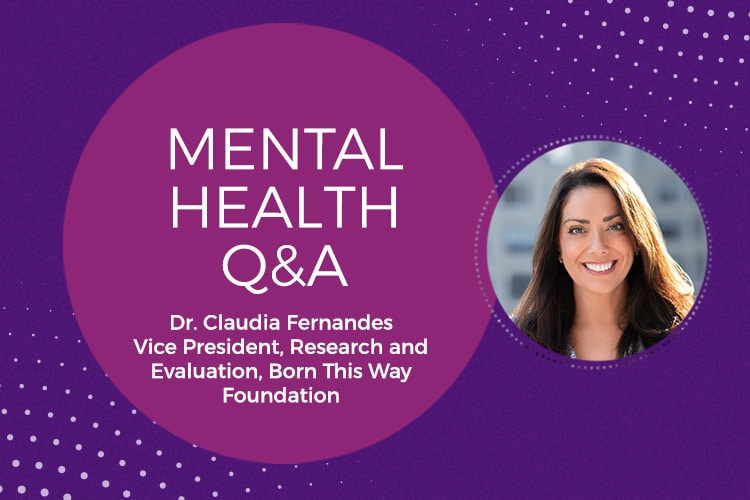
In observance of October 10, Mental Health Awareness Day, we sat down for an in-depth and highly informative conversation with leading researcher, licensed counselor, and expert in youth mental health, Dr. Claudia-Santi F. Fernandes. In the course of conversation, Dr. Claudia shares evidence-based insights on what works and why listening to young people is essential.
We learned that Dr. Claudia brings a unique perspective on supporting youth well-being drawn from classroom experiences to conducting groundbreaking research and directing clinical care. She serves as an assistant clinical professor at the Child Study Center and Department of Biomedical Informatics and Data Science at the Yale School of Medicine. As Vice President of Research + Evaluation at Born This Way Foundation, Dr. Claudia spearheads research strategy and provides scientific expertise in program design and implementation. Co-founded and led by Lady Gaga and her mother, Cynthia Bissett Germanotta, the nonprofit organization leverages research, programs, grantmaking, and partnerships to engage young people and connect them with accessible mental health resources.
Discover Dr. Claudia’s advice, key takeaways, and reasons for optimism in this interview.
Your career spans education, clinical work, and research. How have these different settings shaped your understanding of youth mental health?
My path has taken me through several different phases, and each one has shaped how I think about youth mental health. I spent 10 years as a teacher, school counselor, and as part of a leadership team building a new school from the ground up. That time was formative because it kept me focused on the process in which young people learn, and how they want and need to be supported in school settings. From there, I spent 10 years at Yale, where my research centered on digital games as tools to promote mental health, prevent suicide, and address substance use. Most recently, I’ve spent the last three-plus years in nonprofit leadership, where my team and I conduct youth-engaged research to inform strategy: both our internal organizational decisions and the external steps we take with young people and partners in the field.
Across all these settings, the common theme has been the same: mental health support works best when it’s built in partnership with young people, not just for them, and when it’s grounded in evidence.
You’ve focused on prevention and early intervention. What do you see as the most effective ways to address mental health challenges before they become crises?
Prevention and early intervention are key when thinking about addressing mental health challenges and the youth mental health crisis at large. I have found it helpful to think about multi-tiered systems of support (MTSS) as a useful proactive framework to provide support to as many young people as possible and to allow the trusted adults in their lives to intervene earlier. Tier 1 interventions are universal programming that all young people can benefit from. The Be There Certificate, a free, self-paced online mental health course created by Jack.org in partnership with Born This Way Foundation, is a good example of this because it equips young people with the skills to safely support someone who may be struggling. Tier 2 interventions are typically interventions in small groups to offer more targeted support to young people who may experience greater risk. And Tier 3 interventions offer more intensive, individualized support for young people who need it. Thinking in tiers helps us make sure we’re not only reaching young people once they’re in crisis but building the skills and support systems around them to prevent one.
What patterns have you noticed in how young people experience and express emotional distress?
How young people, or people in general, experience and express emotional distress can vary quite a bit from person to person. Some people are external processors, while others may be experiencing significant distress but are largely processing it internally. With that said, stress is a part of our lives, and we learn to navigate stressful situations through what’s called distress tolerance, the ability to manage uncomfortable emotional or physical experiences. Examples of distress tolerance skills include engaging in activities or hobbies that distract us, exercise or breathing exercises, and grounding techniques that use our senses to help us stay present in the moment.
When does stress become a mental health issue?
When distress becomes persistent, occurring over a long period of time and disrupting day-to-day activities and functioning, that’s when young people or the trusted adults around them should consider connecting to more support. It’s okay to experience discomfort, which is different from pain. Discomfort is often a signal for us. When we feel discomfort due to emotions, they are usually communicating something important to us about our needs, and I encourage young people to meet these feelings with curiosity and explore what these emotions are telling them.
What is the role that peer-to-peer plays in supporting one another’s mental well-being? How does a chronic condition like lupus play into those dynamics?
I frequently hear stories of young people living with a chronic illness being told their symptoms are “all in their head” or having their experience downplayed. According to a study on how young adults with chronic conditions view peer support, 72% of young people aged 18 to 35 who are living with chronic conditions reported significant loneliness, with many describing a strong desire for peer support. That’s exactly why it’s so important to help young people build a broader support system.
Support networks, and having someone you can identify with who has gone through something similar, matter enormously. This is the reason behind the development of the Be There Certificate. Peer support is a skill that can be taught, and building these skills early means young people are better equipped to show up for one another, including friends who are navigating something like a new diagnosis.
How can someone start a conversation on these topics?
Starting a conversation about mental health, or about something like a chronic illness diagnosis, can feel uncomfortable or even intimidating, and I think that discomfort is often the biggest barrier, more than not knowing what to say. The Be There Certificate teaches a simple, actionable framework called the 5 Golden Rules: say what you see, show you care, hear them out, know your role, and connect to help. I like this framework because it isn’t a script, but a way of orienting yourself before a potentially new conversation. For instance, “Say what you see” means naming a change you’ve noticed, gently and without judgment while “Hear them out” reminds us that starting the conversation isn’t about having the right advice ready; it’s about making space for someone to actually be heard.
This approach is broad enough to apply to many situations, whether that’s a friend going through a mental health struggle or a peer navigating a chronic illness diagnosis. The course uses real, unscripted stories from young people to model what these conversations can sound like, since many don’t know how to take that first step. You don’t need to have the perfect words. You just need to be willing to take that first step.
What advice would you give to someone – particularly a young person – who might have just learned about a chronic health diagnosis? What about their support system?
First, I want to validate whatever emotions you’re feeling. For some, a diagnosis can feel like relief; for others, it brings fear, clarity, or uncertainty. All those feelings are valid, and I’d encourage you to hold onto some compassion for yourself while you absorb this information. Second, think about your support system. Research has shown that loneliness impacts our health outcomes, so it’s worth thinking about the people in your life and who you will be able to lean on. Connect with family members or friends you trust, and particularly those who are going, or have gone through, a similar experience. I’d encourage a young person in this position to intentionally ask others for resources, offer support to someone else, and/or join an online support group for young people navigating chronic illness.
For someone looking for more mental health support and resources, where can they look?
Navigating the healthcare system can be challenging, which is why I always encourage people to start by building community and care, and by seeking out evidence-based resources. The Lupus Research Alliance has a Lupus Resource Center on their website with helpful medical, financial, and educational resources. It is also worth looking into registering for an in-person or virtual lupus walk in your area. Community walks like these can be a meaningful first step in building a larger support network, both to give and to get support.
And, on our end at Born This Way Foundation, I encourage you to earn your Be There Certificate. The course is a resource, although not specific to lupus, to help build the skills of learning how to safely show up for someone. And, if you or someone you know is in crisis, that’s a moment to move beyond peer support and reach out to the Crisis Text Line or a trusted professional immediately.
What role, if any, can social media play for young people to access online support?
Chronic illness can feel isolating, and safe online spaces can be a powerful way for young people to connect with peers who share similar experiences. Our former research intern, Sophia Greene, wrote a piece about how safe spaces on TikTok have lightened the weight of young people who have experienced chronic illness; it’s worth checking out. We know from our research at Born This Way Foundation that safe and affirming spaces are critical, and social media literacy is an essential skill for discerning misinformation and staying safe while engaging online. For specific strategies on building those literacy skills, our Manager of Research and Clinical Knowledge at Born This Way Foundation, Fran Giannattasio, co-authored a piece on this topic with Sophia.
Follow Dr. Claudia on Instagram at @drclaudiafernandes and on Twitter at @DrClaudiaSantiF.
Tags: Lady Gaga, Dr. Claudia-Santi F. Fernandes, Born This Way Foundation, Be There Certificiate, Jack.org